




ITIL 4 Practices give modern IT teams a practical, structured way to manage everything from incidents and changes to continual improvement, without the rigid, process-heavy feel of older service management frameworks. For IT professionals in Sydney, Melbourne, Brisbane, Perth, Adelaide and Canberra, understanding the most commonly used ITIL 4 practices is one of the fastest ways to become genuinely useful in a service desk, service management or IT operations role.
What Are ITIL 4 Practices?
ITIL 4 practices are sets of organisational resources designed to perform a specific type of work or accomplish a particular objective, replacing the older ITIL v3 concept of rigid, sequential “processes”. ITIL 4 defines 34 practices in total, grouped into General Management Practices, Service Management Practices and Technical Management Practices.
According to AXELOS, the organisation behind ITIL, ITIL 4 practices are intentionally designed to be flexible and adaptable, so they can sit alongside Agile, Lean and DevOps ways of working rather than replacing them.
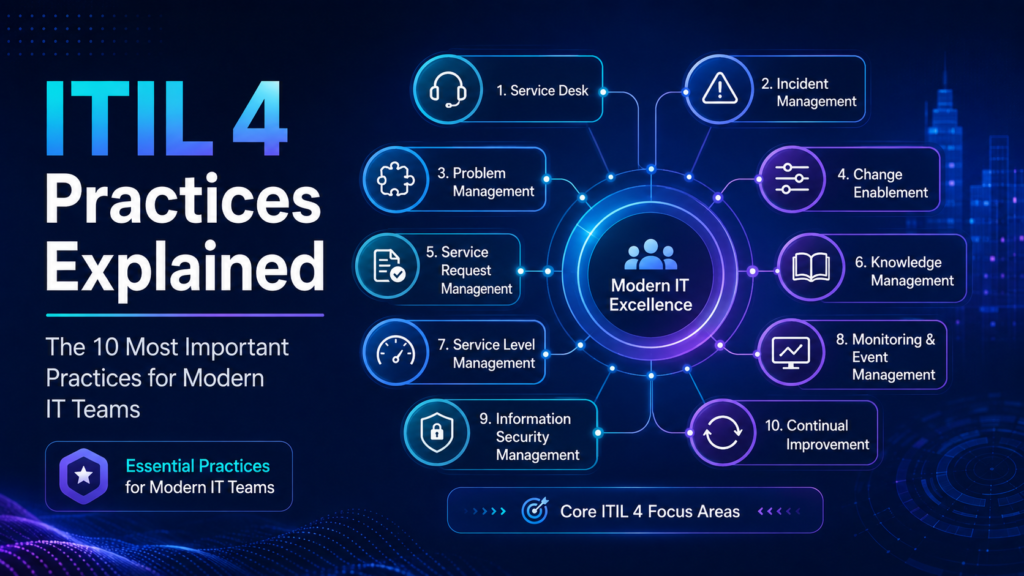
The 10 Most Important ITIL 4 Practices for Modern IT Teams
While all 34 practices have a place in a mature service management function, most day-to-day IT teams get the most value from focusing on these 10 first.
| Practice | What It Covers |
| Incident Management | Restoring normal service operation as quickly as possible after an unplanned disruption |
| Problem Management | Identifying the root cause of incidents to prevent them from recurring |
| Change Enablement | Assessing and approving changes to maximise successful outcomes and minimise risk |
| Service Request Management | Handling pre-defined, routine requests from users in a standardised way |
| Service Desk | The single point of contact between the service provider and its users |
| Continual Improvement | Ongoing, organisation-wide effort to improve services, practices and products |
| Service Level Management | Setting and tracking clear, agreed levels of service with stakeholders |
| Monitoring and Event Management | Systematically observing services and infrastructure to detect and respond to events |
| Release Management | Planning, scheduling and controlling the movement of releases into live environments |
| Deployment Management | Moving new or changed hardware, software or documentation into live environments |
These practices form the backbone of most IT service desks and operations teams, and are typically the first practices covered in depth during ITIL 4 Foundation and Managing Professional training.
How These Practices Work Together
Incident and Problem Management
Incident Management restores service quickly when something breaks, while Problem Management looks deeper to prevent the same incident from recurring. Teams that run these practices well typically see fewer repeat incidents over time.
Change Enablement and Release Management
Change Enablement assesses risk and approves changes, while Release Management and Deployment Management handle how those changes are actually packaged and moved into live environments.
Service Desk and Service Request Management
The Service Desk is the single point of contact for users, while Service Request Management handles the routine, pre-approved requests that come through it, such as password resets or access requests.
Continual Improvement
Sitting across all other practices, Continual Improvement ensures that lessons learned from incidents, problems and service performance actually lead to ongoing, measurable improvement.
Why This Matters for Australian IT Teams
ITIL 4 practice knowledge is increasingly expected across Australian IT departments, service desks and managed service providers, regardless of whether the organisation runs a traditional ITIL model or a hybrid Agile/ITIL approach.
- Sydney — financial services IT teams applying structured Incident and Change Enablement practices
- Melbourne — retail and logistics IT departments using Service Request Management to scale support
- Brisbane — government-adjacent and resources IT teams applying Problem Management to reduce recurring outages
- Perth — mining and energy IT teams using Monitoring and Event Management across critical infrastructure
- Adelaide — health and manufacturing IT teams applying Continual Improvement to service performance
- Canberra — government departments applying ITIL 4 practices within formal service management frameworks
Industry sources continue to note that ITIL remains one of the most widely adopted service management frameworks globally, and Australian employers frequently list ITIL 4 certification as a preferred qualification for service desk, service management and IT operations roles.
How This Connects to ITIL 4 Certification
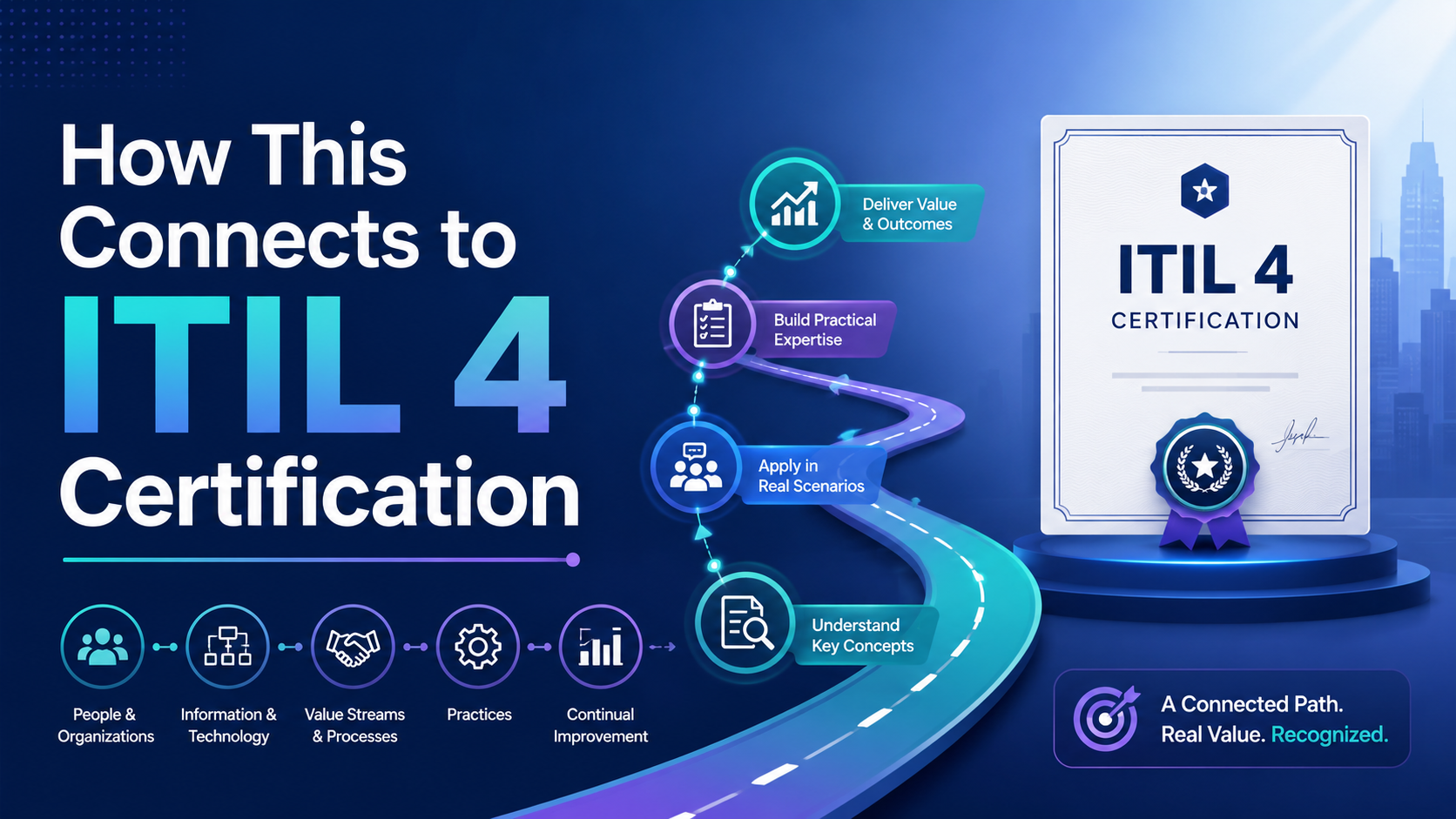
Understanding ITIL 4 Practices in depth is exactly what ITIL 4 certification training covers. Our ITIL 4 Foundation and Managing Professional guide explains which certification level to start with, and our ITIL Incident Management vs Problem Management guide goes deeper into two of the practices covered above.
If you’re comparing the investment against the career upside, our ITIL Certification Cost Australia 2026 guide and ITIL Salary Guide Australia 2026 break down exam fees, training costs and typical salaries by role and city.
Getting Started With ITIL 4 Training
If your team wants to build practical knowledge of ITIL 4 Practices, the most structured path is a certified ITIL 4 course covering both Foundation-level concepts and the practices most relevant to your role. Logitrain’s ITIL certification training is delivered by certified trainers across Australia, with options for learners in Sydney, Melbourne, Brisbane, Perth, Adelaide and Canberra, either in person or live online.
For the full range of IT service management and related training options, Logitrain’s complete course catalogue at logitrain.com.au covers complementary certifications that support a well-rounded IT service management career.
Frequently Asked Questions
How many practices are there in ITIL 4?
ITIL 4 defines 34 management practices in total, grouped into General Management, Service Management and Technical Management practices this guide focuses on the 10 most relevant to day-to-day IT team operations.
Do I need to memorise all 34 ITIL 4 practices for certification?
ITIL 4 Foundation focuses on core concepts and a smaller set of key practices in detail, while later modules such as Managing Professional go deeper into specific practices relevant to that stream.
What is the difference between Incident Management and Problem Management?
Incident Management focuses on restoring service quickly, while Problem Management investigates the underlying cause to prevent the incident from happening again we cover this in detail in our dedicated comparison guide.
Are ITIL 4 practices relevant to Agile and DevOps teams?
Yes. ITIL 4 was specifically redesigned to work alongside Agile, Lean and DevOps ways of working, rather than being a rigid, sequential process framework.
Is ITIL 4 practice knowledge in demand across Australia?
Yes. Employers in Sydney, Melbourne, Brisbane, Perth, Adelaide and Canberra continue to list ITIL 4 practice knowledge as a preferred or required skill for service desk, service management and IT operations roles.
Conclusion
ITIL 4 Practices give modern IT teams a practical, flexible way to manage incidents, changes and continual improvement without heavy, outdated process overhead. IT professionals across Australia who understand these 10 practices in depth are well positioned for service desk, service management and IT operations roles in 2027 and beyond.