



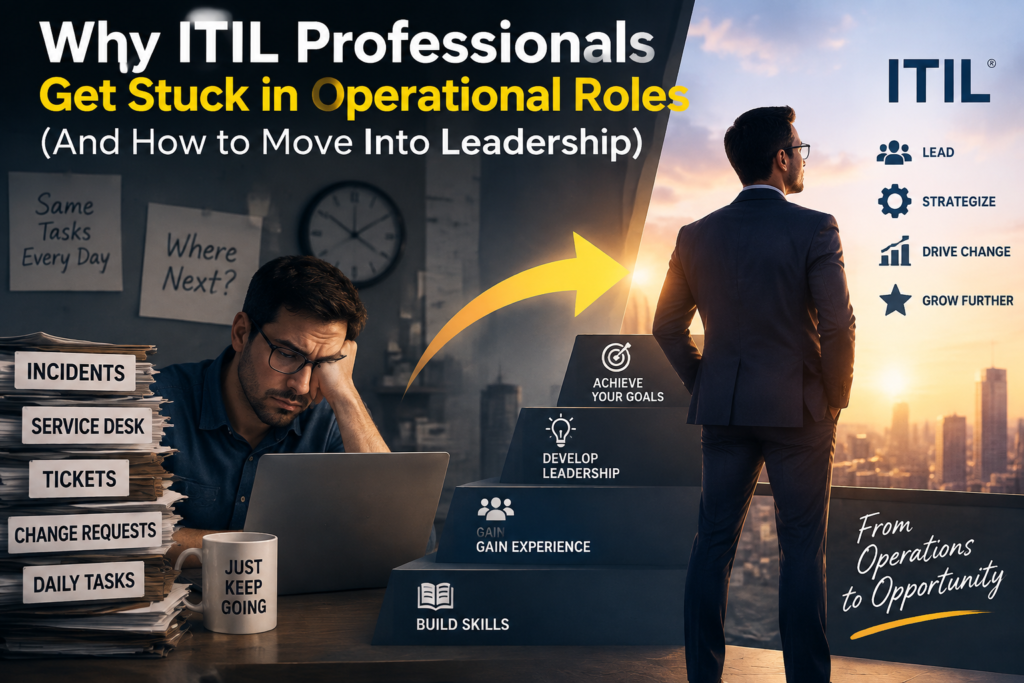

Plenty of ITIL-certified professionals run a tight service desk, hit their SLA targets, and manage incidents well and still spend years in the same operational role. Why ITIL professionals get stuck in operational roles usually comes down to one thing: operational excellence and leadership readiness are genuinely different skill sets, and most training stops at the first one. This article explains exactly what’s missing, and how ITIL certification training beyond Foundation level helps close that gap.
Why ITIL Professionals Get Stuck in Operational Roles
ITIL Foundation teaches the language and structure of IT service management incident management, problem management, change enablement. It’s essential, but it’s fundamentally about running existing processes well, not about shaping strategy or influencing how a business invests in IT. Professionals who stop at Foundation-level thinking keep getting evaluated as reliable operators, not as future leaders, no matter how many years of solid delivery they rack up.
The Real Reasons ITSM Professionals Plateau
1. They Stay Focused on Process, Not Business Value
Running Incident Management well keeps the lights on. Explaining how reducing incident resolution time translates into cost savings, customer retention, or risk reduction is what gets a professional noticed by leadership. Most operational ITIL professionals never make that translation, because it isn’t part of day-to-day process execution.
2. They Don’t Build Stakeholder Influence
Service desk and operations roles rarely require influencing senior stakeholders directly. But leadership roles are built almost entirely on that skill negotiating priorities, managing expectations upward, and building enough trust that leadership brings you into strategic conversations early, not after decisions are already made.
3. They Avoid Financial and Value Literacy
Budgets, cost-to-serve, and value realisation aren’t typically part of an operational analyst’s day, so many ITIL professionals never build fluency here. Without it, it’s very hard to be trusted with decisions about where IT investment should go which is a core part of most leadership roles.
4. They Rarely Lead Organisational Change
Change Enablement, as taught operationally, is about assessing and approving individual changes. Leading organisational change getting a whole department to adopt a new way of working is a different, much harder skill. This is exactly the gap the ITIL 4 Managing Professional pathway is designed to close.
5. They Think in Practices, Not Strategy
Operational professionals think in terms of individual ITIL practices incident, problem, change. Leaders think in terms of the whole Service Value System: how all of those practices work together to create value for the business, and where the biggest strategic gaps actually are.
What Moving Into Leadership Actually Requires
- Fluency in translating operational metrics into business value
- The ability to influence and build trust with senior stakeholders
- Basic financial literacy budgets, cost-to-serve, value realisation
- Experience leading change at a team or organisational level, not just approving it
- A strategic view of the full Service Value System, not just individual practices
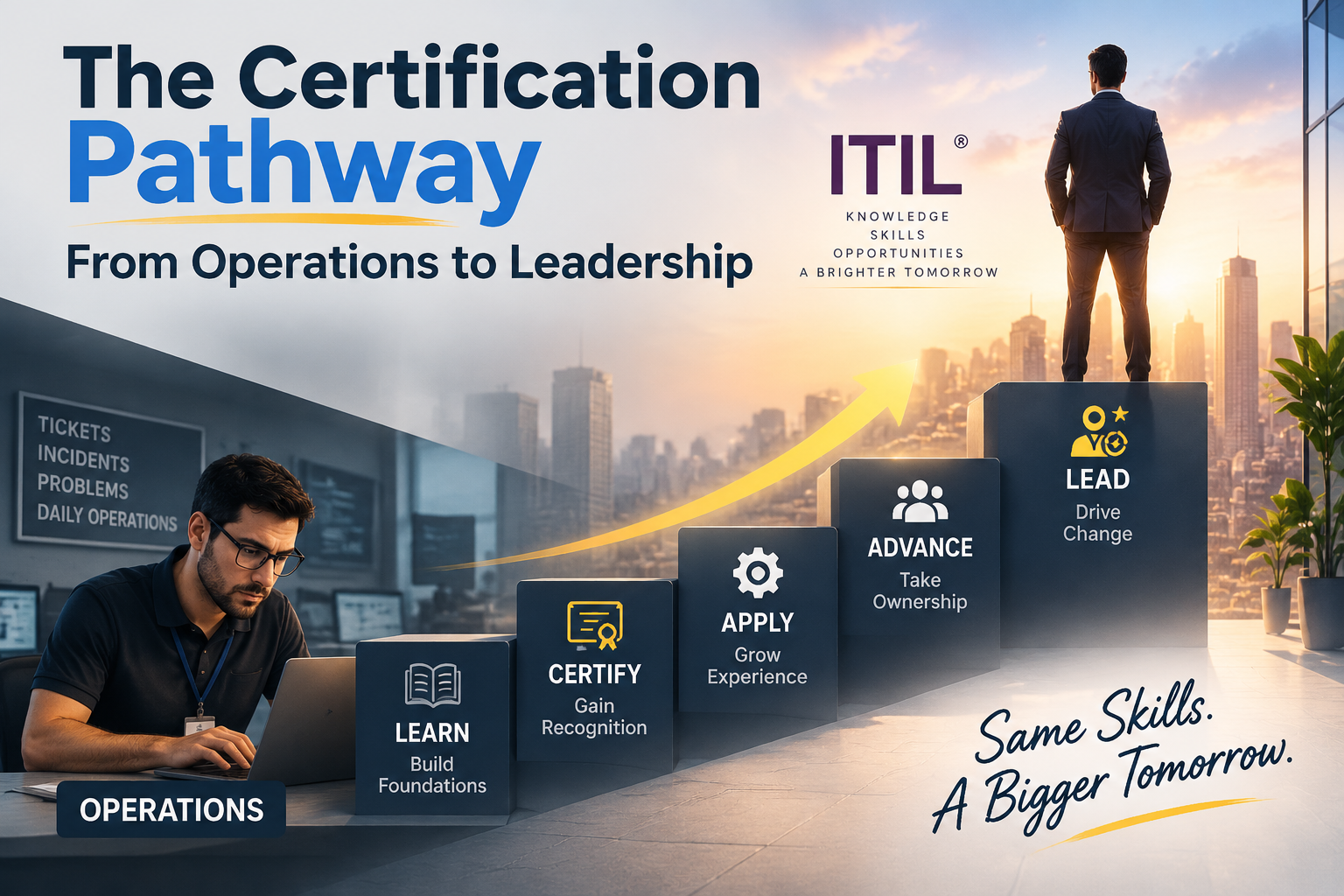
The Certification Pathway From Operations to Leadership
Moving into leadership doesn’t require starting from scratch it requires deliberately building on your existing ITIL 4 Foundation knowledge. The ITIL 4 Managing Professional designation is built for practitioners ready to run and improve IT-enabled services and teams, while the ITIL 4 Strategic Leader designation is specifically designed for professionals ready to influence IT strategy at a senior, cross-functional level exactly the capability that separates operational roles from leadership ones.
Practical Steps You Can Start Now
- Practise summarising one operational metric in terms of business impact each week
- Ask to sit in on a budget or planning conversation, even as an observer
- Volunteer to lead a small process improvement initiative end to end
- Build a habit of asking “what value does this create” before “how do we execute this”
Why This Gap Matters More Than Ever
Since 2021, the ITIL framework has been owned and developed by PeopleCert, which has continued to evolve the certification pathway specifically to separate operational competence from strategic leadership capability — a strong signal that employers are increasingly hiring and promoting based on this distinction. Industry bodies such as itSMF Australia similarly emphasise that mature ITSM organisations need leaders who can connect service management practice to genuine business outcomes, not just professionals who can run the practices well.
ITIL Leadership Demand Across Australia
We see this operational-to-leadership transition happening consistently for professionals training with us across Melbourne, Sydney, Brisbane, Perth, Adelaide and Canberra, where organisations across government, finance and healthcare are actively looking for ITSM leaders who can connect service delivery to genuine business results.
Common Mistakes That Keep ITIL Professionals in Operational Roles
- Stopping at Foundation level and assuming experience alone will lead to promotion
- Never learning to explain operational work in terms stakeholders actually care about
- Avoiding budget, planning or strategy conversations instead of asking to be included
- Treating change management as a checklist rather than a leadership opportunity
- Waiting to be offered a leadership role instead of building the case for one
Final Thoughts
If you’ve been asking why ITIL professionals get stuck in operational roles, the honest answer is that operational excellence and leadership readiness are genuinely different skills — and the second one has to be built deliberately. Start by building financial and stakeholder fluency, then formalise it through ITIL 4 Managing Professional or Strategic Leader training. Contact our team to map out the right next certification for your career stage, or read more on our blog.